
I made fresh coffee. The ordinary act of measuring grounds and pouring water gave my hands something to do while my mind tried to rearrange everything I thought I knew. Rose accepted the cup with both hands and held it without drinking.
We sat in the quiet of the living room while the morning deepened. Outside, a school bus passed on its route. I should have been at the elementary school already, preparing for the day. I had called in a personal day the moment Rose finished speaking. The substitute would manage. I could not.
“You said there was more,” I said.
Rose set the cup down carefully. “Your father kept every letter I ever wrote him after he returned. They are in a box in the attic, behind the old cedar chest. He showed me once, years ago, when he asked me to visit while your mother was away caring for her sister. He wanted me to know he had not forgotten. He also wanted me to see that the house was loved again.”
I had been in the attic dozens of times. I had never noticed a box behind the cedar chest.
“He asked me not to contact you while he was alive,” she continued. “He believed the truth would only burden you. After he died I respected that wish as long as I could. The money was my compromise.”
I leaned forward. “Did my mother know?”
Rose’s expression softened with something like respect. “She knew he had loved someone before her. She did not know the rest. He was careful. He loved her deeply. That was never in question.”
The words settled in a complicated place inside me. My parents’ marriage had always seemed solid, quiet, built on shared routines and small kindnesses. The idea that my father had carried a private grief alongside that love did not diminish it. It only made him more human, and more distant at the same time.
“I want to see the letters,” I said.
Rose nodded. “I hoped you would.”
We climbed the narrow stairs to the second floor and then the even narrower ones to the attic. The air was warmer up there, scented with old wood and the faint sweetness of cedar. Dust motes floated in the single shaft of light from the window at the far end. The cedar chest sat exactly where it had for as long as I could remember. Behind it, pushed against the eave, was a plain cardboard box sealed with yellowed tape.
I pulled it free. The tape cracked under my fingers. Inside were stacks of envelopes, some addressed in my father’s handwriting, some in a more delicate script I now recognized as Rose’s. Dates stretched across more than a decade.
We carried the box downstairs and sat again at the coffee table. I opened the earliest letter. My father’s handwriting was younger, more angular.
Rose,
I walked past the house today. The new owners have painted the door blue. It looks wrong. I keep thinking of the summer we spent sanding the porch rails. I should have stayed. I know that now. If there is anything left to say, I am ready to hear it.
The next letters were spaced months apart. Then years. Rose’s replies were careful, never accusing, always circling the loss without naming it fully. In one she wrote simply, The rooms are quieter than they should be. In another, I sold the piano. It was too heavy to move and too full of memory to keep.
I read until my eyes burned. Outside, the sun climbed higher. The ordinary sounds of the neighborhood continued as if nothing inside the house had shifted.
When I finally looked up, Rose was watching me with an expression I could not name.
“He came to see me the week after your mother died,” she said. “You were nine. He brought a photograph of you standing on these same porch steps. He said you had her eyes but his stubbornness. He asked if I still wanted the house to matter to someone who would love it the way we once did. I told him yes. That was the day the second part of the promise was made.”
I closed the letter in my hands. “The payments were never just money.”
“No,” she said. “They were the only way I knew to stay connected without breaking what he asked me to protect.”
I stood and walked to the front window. The maple tree my father had planted when I was twelve moved slightly in the breeze. The porch steps looked the same as they had in the oldest photographs, only worn smoother by decades of feet.
“I don’t know what to do with this,” I said.
Rose remained seated. “You do not have to decide anything today. I only needed you to know the house has always been held by more than one set of hands, and that the hands that sent the money never wanted anything in return except the knowledge that you were all right.”
I turned back to her. “Will you stay for lunch?”
A small, tired smile touched her mouth. “I would like that.”
We ate at the kitchen table my father had built. Rose told me small stories about the original farmhouse, about the way the light used to fall across the floorboards in late afternoon, about the neighbor who once brought over a pie every Sunday for an entire year after her parents died. The stories filled the rooms with a history I had never known was missing.
When she left that afternoon I stood on the porch and watched her walk slowly to the car parked at the curb. She moved carefully, as if each step measured something precious. Before she drove away she looked back once. I raised my hand. She did the same.
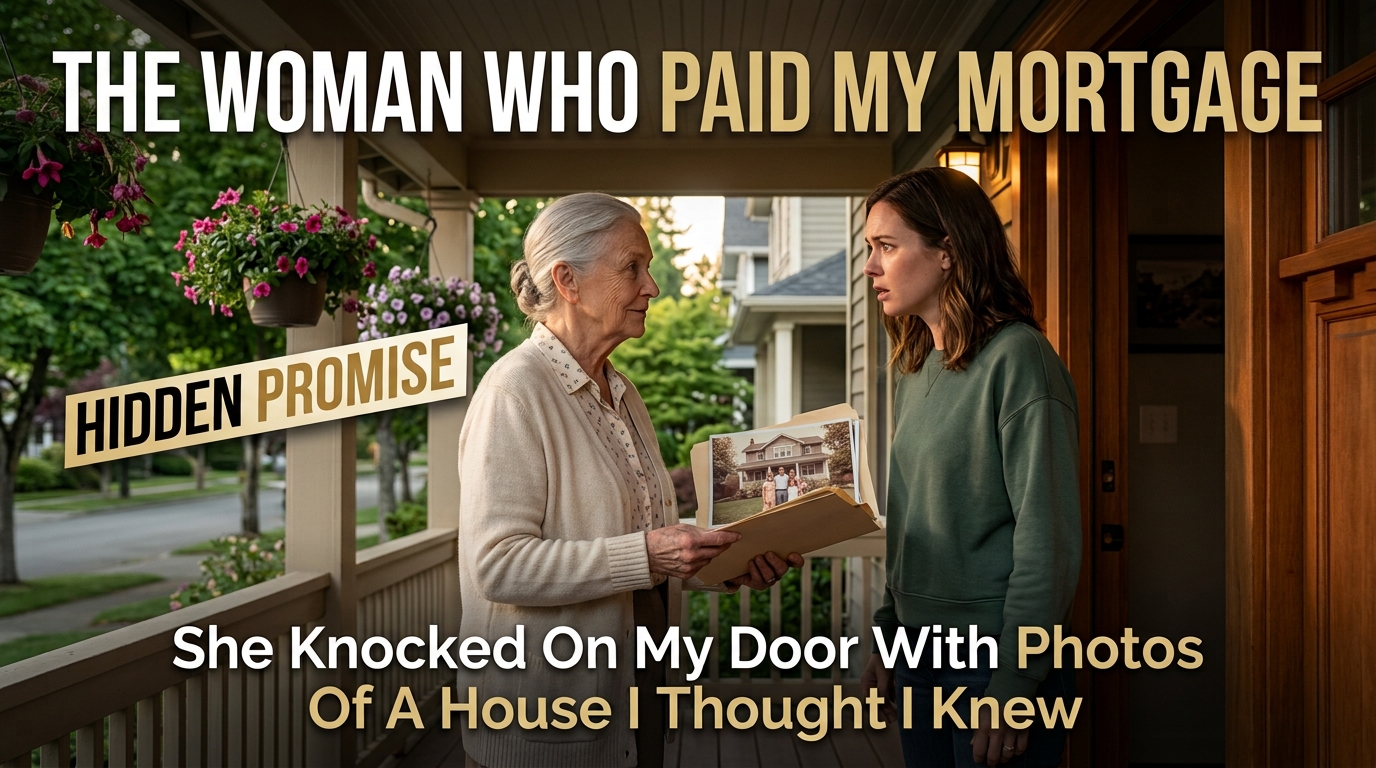
Inside, the box of letters waited on the table. The folder of photographs lay open beside it. The house felt different around me, larger somehow, and more crowded with the lives that had passed through it.
That night I slept in the bedroom that had once been my parents’. For the first time in years I left the hallway light on, as if someone else might need to find their way through the dark.